Private Office vs. Traditional Office Lease: Which Is Right for Your Business?
Private Office vs. Traditional Office Lease: Which Is Right for Your Business?
Choosing an office is a big step for any business. But today, the decision isn’t simply about finding the right location or square footage, it’s also about deciding how much flexibility your business needs.
Traditional office leases have long been the standard, but with changing team sizes, hybrid work, and an unpredictable business environment, more companies are looking for workspace solutions that allow them to adapt without making a long-term commitment.
So, which option makes the most sense for your business?
The Traditional Office Lease
A traditional lease can make sense for an established business that knows exactly where it wants to be, how much space it will need, and is comfortable making a longer-term commitment.
It also gives businesses greater control over their environment, from branding and layout to furniture and design.
However, that control comes with additional responsibilities. Beyond rent, businesses may need to consider furniture, internet, utilities, maintenance, meeting rooms, office management, and other operating costs. A fixed amount of space can also become challenging if your team grows or shrinks before your lease ends.
The Flexible Private Office
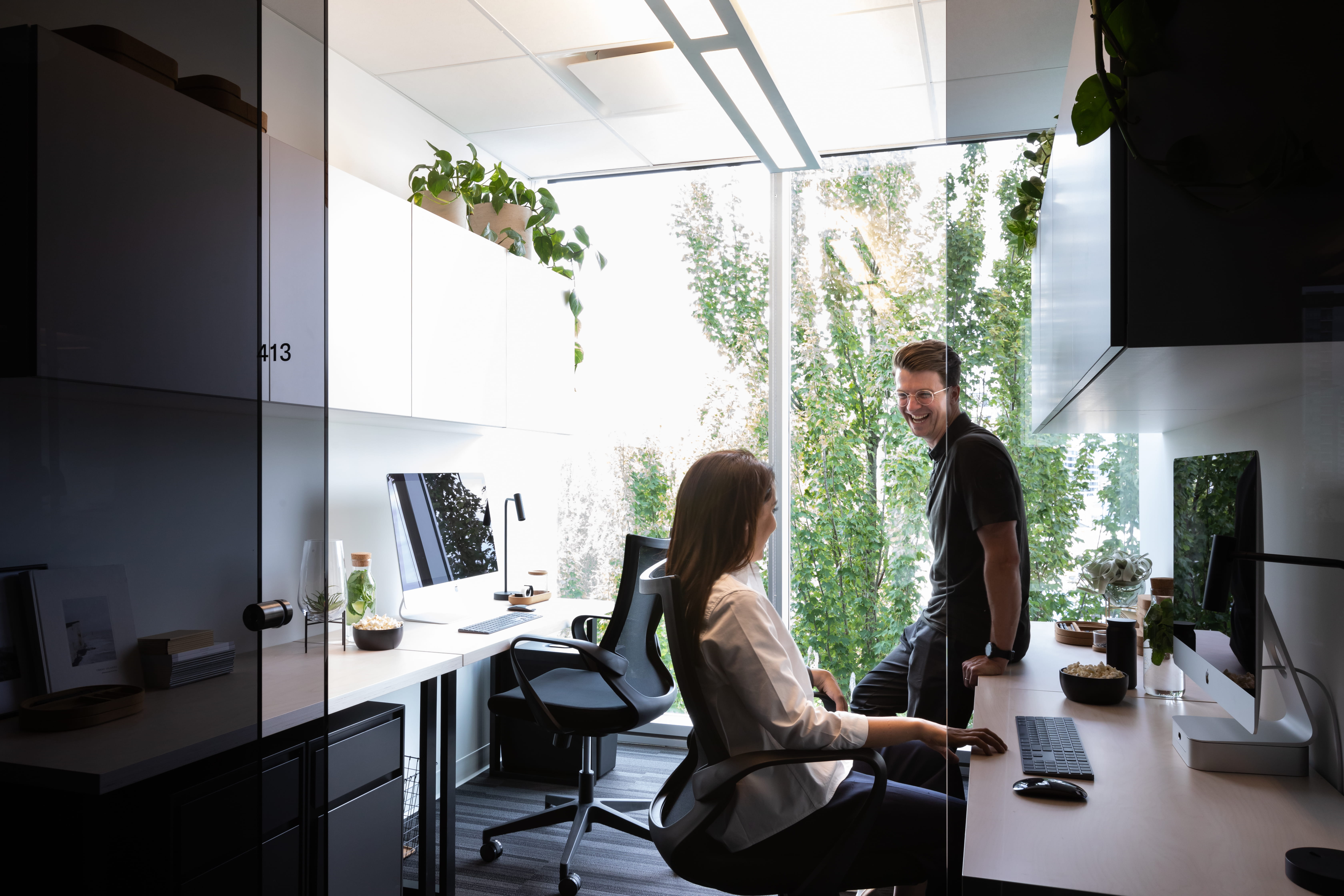
A flexible private office offers many of the benefits of having your own office without taking on the same level of commitment.
Teams can have a dedicated, professional space while benefiting from shared amenities, meeting rooms, common areas, and other services already built into the workspace.
More importantly, flexible workspace gives businesses room to change.
If your team grows, you may need a larger office. If your company moves toward hybrid work, you may realize you need less space than expected. And if you're entering a new market or simply unsure what your business will look like two or three years from now, committing to a traditional long-term lease can feel unnecessarily restrictive.
This adaptability is one of the main reasons businesses are incorporating flexible space into their real estate strategies. Flexible offices can help companies manage uncertain demand, enter new markets, and preserve capital rather than locking themselves into space they may not need in the future.
Flexibility Matters More in Uncertain Times
Businesses have always had to plan for the future. The difference today is that the future can be much harder to predict.
Your team could look very different a year from now. Your employees' expectations around where they work could change. Your business may expand into another market or decide to operate more efficiently with a smaller footprint.
Flexibility gives businesses the ability to make the best decision for today without having to perfectly predict tomorrow.
That doesn't mean a traditional lease is the wrong choice. For some established organizations, the stability and control of a long-term space will continue to make sense. But for growing businesses, startups, hybrid teams, and companies navigating change, a flexible private office can provide a valuable middle ground: the professionalism of your own office with the freedom to evolve.
Find a Workspace That Grows With You
At Pavilion, our private offices are designed to give businesses a professional home while maintaining the flexibility to adapt as their needs change.
From growing teams to established businesses looking for a more flexible way to work, Pavilion offers thoughtfully designed workspaces, premium amenities, meeting rooms, and a community, all without the complexities of managing a traditional office.
Ready to find the right workspace for your team? Book a tour today.